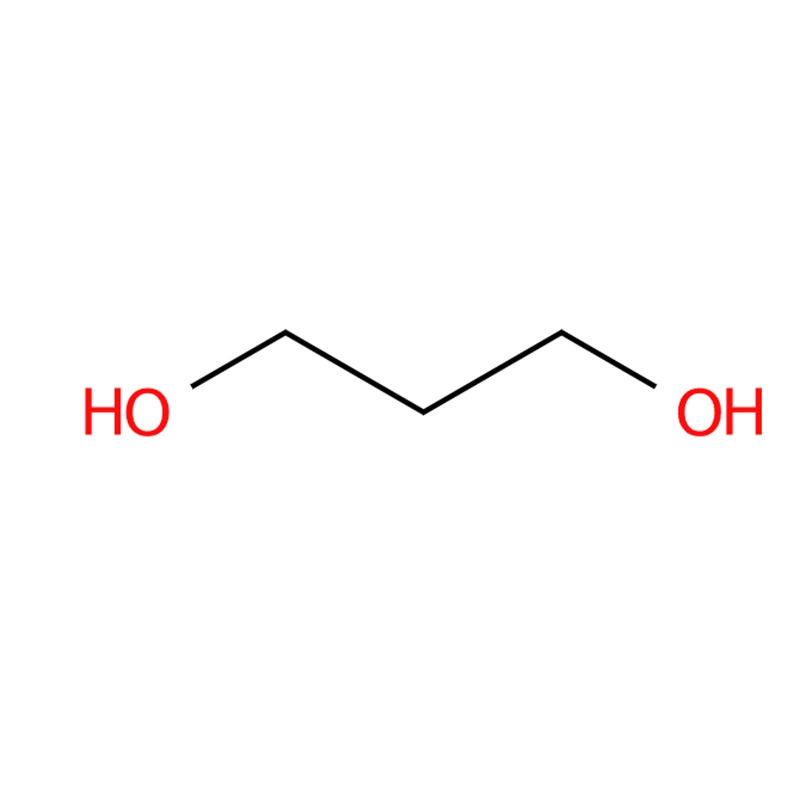
Products Description of 1,3-Propanediol CAS#504-63-2
1,3-Propanediol, abbreviated as PDO, is a colorless, transparent, slightly viscous liquid with faint sweet odor. It is miscible with water, ethanol and many polar organic solvents. Its molecular formula is C3H8O2, molecular weight 76.09 g/mol. The boiling point is around 214 ℃, and melting point is -27 ℃. The density ranges from 1.050 to 1.053 g/cm³ at 20 ℃.
This aliphatic diol features low volatility and stable physical properties under ambient conditions. It has low freezing point and good fluidity at room temperature. The product maintains high purity with minimal impurities in standard grades.
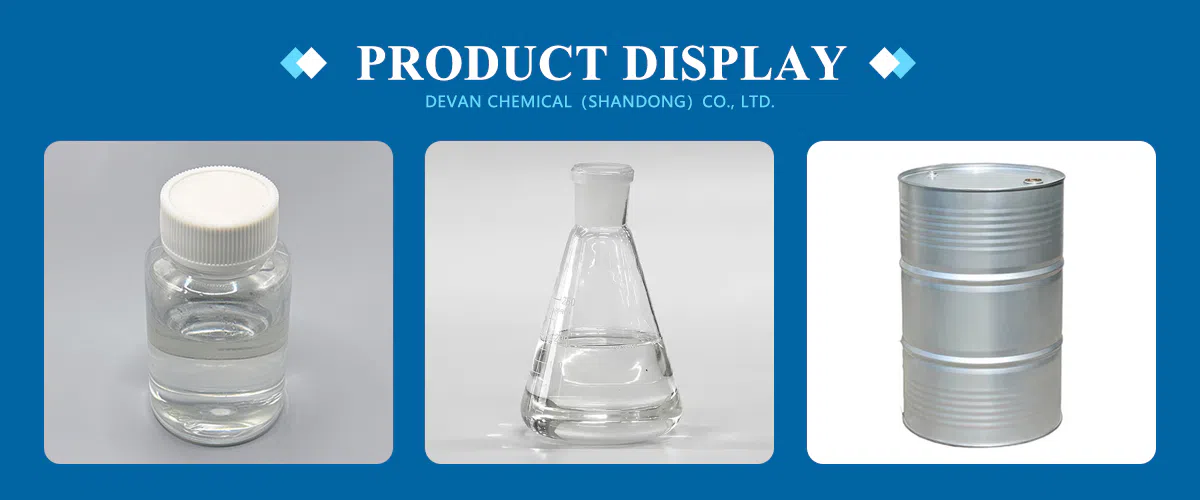
1,3-Propanediol Chemical Properties
| Melting point | -27 °C (lit.) |
| Boiling point | 214 °C/760 mmHg (lit.) |
| density | 1.053 g/mL at 25 °C (lit.) |
| vapor pressure | 0.8 mm Hg ( 20 °C) |
| refractive index | n20/D 1.440(lit.) |
| FEMA | 4753 | 1,3-PROPANEDIOL |
| Fp | >230 °F |
| storage temp. | Store below +30°C. |
| solubility | H2O: soluble |
| pka | 14.46±0.10(Predicted) |
| form | Oily Liquid |
| color | Clear |
| PH | 4.5-7.0 (100g/l, H2O, 20℃) |
| explosive limit | 2.5%(V) |
| Water Solubility | 100 g/L |
| Merck | 149714 |
| BRN | 969155 |
| Dielectric constant | 35.0(20℃) |
| InChIKey | YPFDHNVEDLHUCE-UHFFFAOYSA-N |
| LogP | -0.71 at 20℃ |
| CAS DataBase Reference | 504-63-2(CAS DataBase Reference) |
| NIST Chemistry Reference | 1,3-Propanediol(504-63-2) |
| EPA Substance Registry System | 1,3-Propanediol (504-63-2) |
| Hazard Codes | Xi |
| Risk Statements | 38 |
| Safety Statements | 23-24/25 |
| WGK Germany | 1 |
| RTECS | TY2010000 |
| Autoignition Temperature | 405 °C |
| TSCA | Yes |
| HS Code | 29053980 |
| Hazardous Substances Data | 504-63-2(Hazardous Substances Data) |
| Toxicity | LD50 orally in Rabbit: 15670 mg/kg LD50 dermal Rabbit > 20000 mg/kg |

Product Application of 1,3-Propanediol CAS#504-63-2
1,3-Propanediol (PDO) serves as a key monomer for synthesizing polytrimethylene terephthalate (PTT), a high-performance polyester widely applied in textile fibers, carpets and engineering plastics. It also acts as a vital building block to manufacture polyurethanes, unsaturated polyesters, coatings and adhesives.
In personal care formulations, it functions as a mild humectant and solvent, helping retain skin moisture and dissolve active ingredients. It can be adopted in pharmaceutical topical preparations as well. Additionally, PDO is used for producing antifreeze agents and heat-transfer fluids. Its versatile reactivity makes it popular in fine chemical synthesis and various formulation projects.