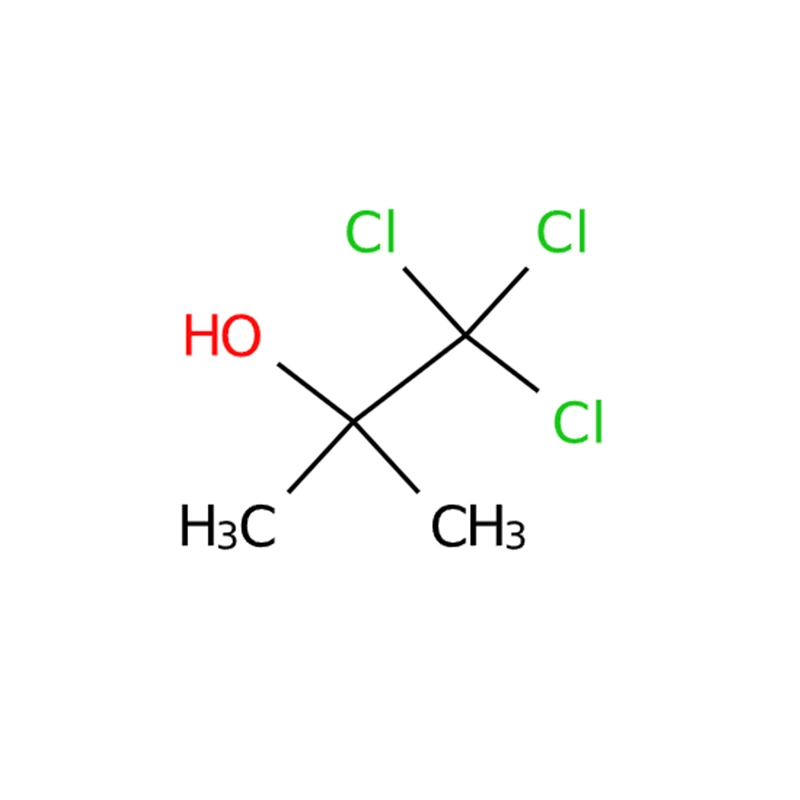
Product Description of Chlorobutanol CAS#57-15-8
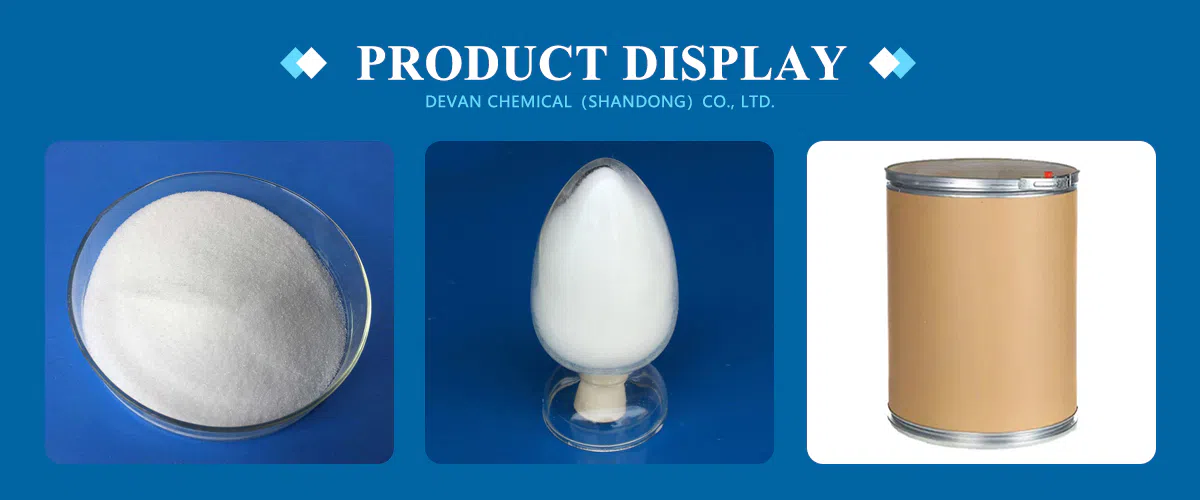
Chlorobutanol occurs as colour-free crystalline substance, which exists in hemihydrate and anhydrous crystal variants. The hemihydrate melts at 78 °C. It shows poor aqueous solubility with the solubility ratio 1:250 in water, while dissolving fast inside ethanol (1:1), glycerin (1:10), diethyl ether, chloroform and essential volatile oils.
Its anhydrous counterpart features a melting-point value of 97 °C and the normal-pressure boiling-point at 167 °C; the boiling temperature reaches 135 °C under 32.7 kPa. Hot-water solubility is favourable for this form, as one-gram sample dissolves in 1-millilitre ethanol or ten-millilitre glycerol. It can also mix well with ether, petroleum ether, acetone, chloroform, glacial acetic acid and multiple grease-based solvents.
This chemical compound is prone to sublimation under heating conditions and is capable of evaporating alongside steam. A distinctive camphor-scented smell serves as its sensory feature.
Chlorobutanol Chemical Properties
| Melting point | 78 °C |
| Boiling point | 173 °C |
| density | 1.3170 (estimate) |
| Fp | >110°C |
| storage temp. | Sealed in dry,Room Temperature |
| solubility | Slightly soluble in water, very soluble in ethanol (96 per cent), soluble in glycerol (85 per cent). |
| form | Solid |
| pka | 12.87±0.29(Predicted) |
| color | Hydrated crystals |
| Odor | camphor odor |
| Water Solubility | 8g/L(20 ºC) |
| Stability: | Stable. Generates toxic fumes on combustion. |
| LogP | 2.03 |
| CAS DataBase Reference | 57-15-8(CAS DataBase Reference) |
| NIST Chemistry Reference | 2-(Trichloromethyl)-2-propanol(57-15-8) |
| EPA Substance Registry System | 1,1,1-Trichloro-2-methyl-2-propanol (57-15-8) |
| Hazard Codes | Xn |
| Risk Statements | 22-36/37/38 |
| Safety Statements | 26-36/37/39 |
| WGK Germany | 3 |
| Hazardous Substances Data | 57-15-8(Hazardous Substances Data) |
| Toxicity | MLD orally in dogs, rabbits (mg/kg): 238, 213 (Impens) |
Product Application of Chlorobutanol CAS#57-15-8
Chlorobutanol ranks as one essential pharmaceutical-grade raw material for preparing antibacterial agents, anti-vomiting ingredients and topical pain-relieving supplies. Its one-percent water-based solution, alongside 5%-10% ointment preparations, can be adopted for surface sanitisation and germ-removal tasks. Apart from its wide-ranging uses within the healthcare sector, the substance also acts as a building-block material and laboratory testing agent for diverse organic-chemistry synthetic workflows.