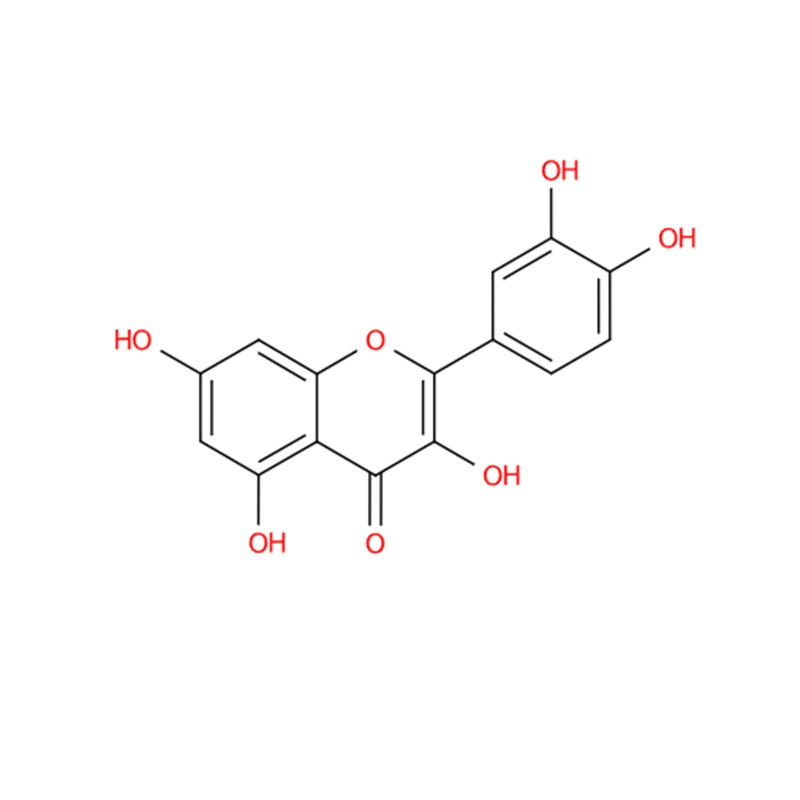
Products Description of Quercetin CAS#117-39-5
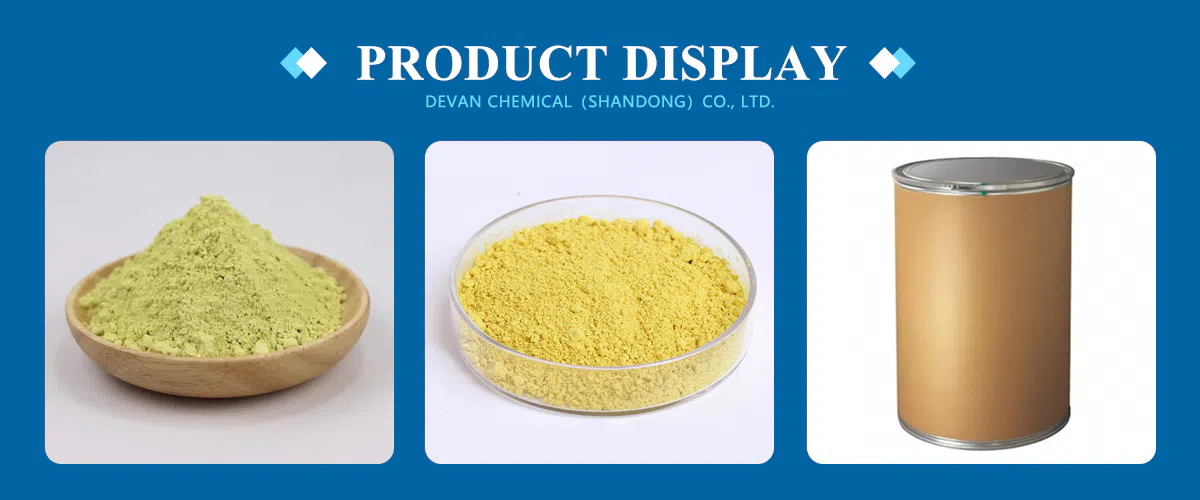
Quercetin is a naturally occurring flavonoid, it takes the form of bright yellow to yellowish green crystalline powder. The substance possesses favourable heat-resistant property and starts to break down at 314°C. This material shows poor water solubility yet dissolves well inside alkali-based liquid.
Quercetin along with its derivatives naturally exist in many edible plants including onion, sea-buckthorn, hawthorn, pagoda-tree blossom and tea leaves.Numerous bio-active properties are available for the compound, covering radical scavenging, oxidation resistance, bacteriostasis, virus inhibition and anti-allergic capacity. While added into lard and other grease products, its antioxidizing capacity can compete against common additives like BHA and PG.
Quercetin Chemical Properties
| Melting point | 314 °C |
| Boiling point | 363.28°C (rough estimate) |
| density | 1.3616 (rough estimate) |
| refractive index | 1.4790 (estimate) |
| storage temp. | room temp |
| solubility | insoluble in H2O; ≥15.1 mg/mL in DMSO; ≥3.28 mg/mL in EtOH |
| pka | 6.31±0.40(Predicted) |
| form | Powder |
| color | Bright yellow to yellowish green |
| Water Solubility | <0.1 g/100 mL at 21 ºC |
| Merck | 138122 |
| BRN | 317313 |
| InChIKey | REFJWTPEDVJJIY-UHFFFAOYSA-N |
| LogP | 1.989 (est) |
| CAS DataBase Reference | 117-39-5(CAS DataBase Reference) |
| IARC | 3 (Vol. Sup 7, 73) 1999 |
| EPA Substance Registry System | Quercetin (117-39-5) |
| Hazard Codes | T,Xi |
| Risk Statements | 25-36/37/38 |
| Safety Statements | 45-36-26 |
| RIDADR | 2811 |
| WGK Germany | 3 |
| RTECS | LK8750000 |
| HazardClass | 6.1(b) |
| PackingGroup | III |
| HS Code | 29329990 |
| Hazardous Substances Data | 117-39-5(Hazardous Substances Data) |
| Toxicity | LD50 oral in rat: 161mg/kg |

Product Application of Quercetin CAS#117-39-5
As a dietary supplement ingredient, it is formulated into capsules, tablets and functional beverages to support antioxidant defense, immune health and anti-inflammatory balance in the human body.
In the food sector, quercetin serves as a natural antioxidant that protects fats, oils and processed foods from oxidative rancidity, helping to preserve color, flavor and nutritional quality during storage.
In pharmaceutical research, it demonstrates a broad range of bioactive properties, including anti-free radical, antimicrobial, antiviral, anti-allergic and cardiovascular protective activities, making it a promising lead compound for drug development.
In cosmetics, it is incorporated into anti-aging and skin care products for its free radical scavenging and skin protective benefits. With its multifunctional biological activities and natural origin, quercetin continues to gain attention as a versatile active ingredient in health and wellness markets.