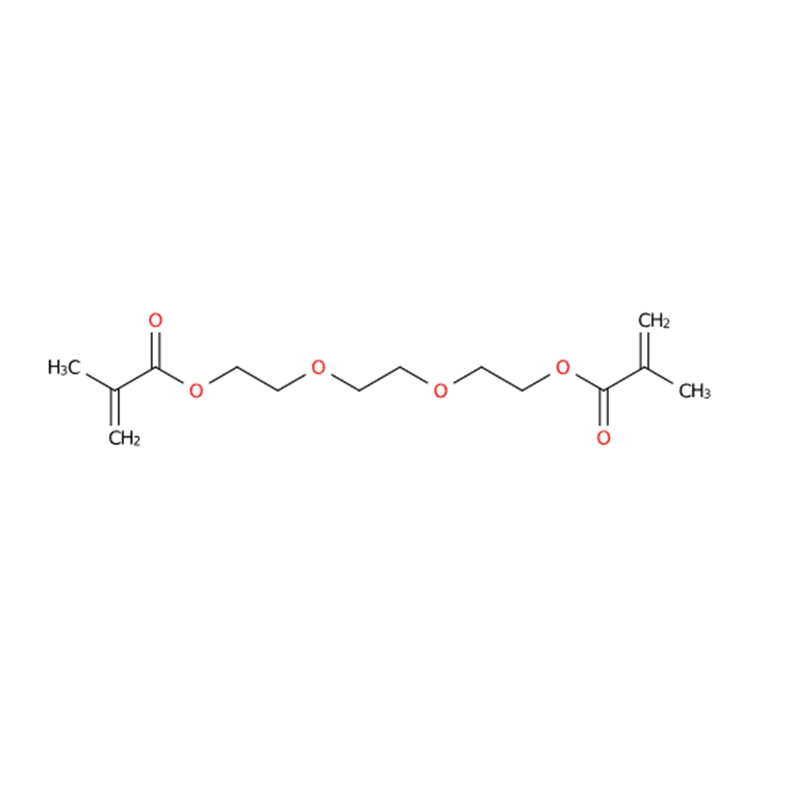
Product Description of Triethylene Glycol Dimethacrylate CAS#109-16-0
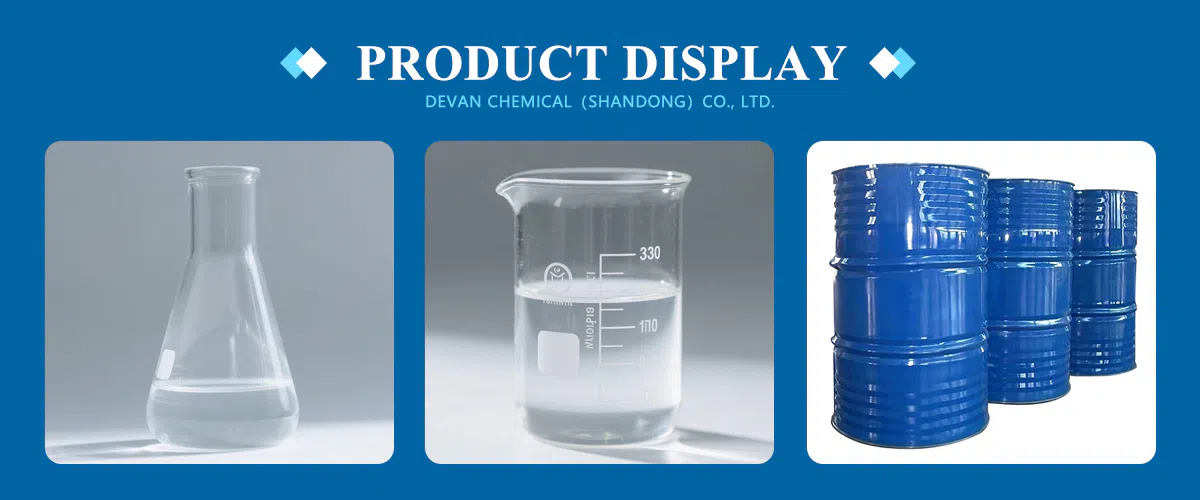
Triethylene Glycol Dimethacrylate, also known as TEGDMA, is a difunctional methacrylate monomer. It appears as colorless to pale-yellow oily liquid with a mild ester-like smell. Its molecular weight is 286.32, and it contains two reactive carbon-carbon double bonds for free-radical polymerization.
This low-viscosity substance dissolves well in most organic solvents and shows limited solubility in water. It is commonly stabilized with polymerization inhibitor for long-term storage. As a reliable cross-linking raw-material, it improves the surface hardness and wear-resistance of cured polymers and fits well for UV-cured supplies and dental composite resins.
Triethylene Glycol Dimethacrylate Chemical Properties
| Melting point | -52°C |
| Boiling point | 170-172 °C5 mm Hg(lit.) |
| density | 1.092 g/mL at 25 °C(lit.) |
| vapor pressure | 0.077Pa at 20℃ |
| refractive index | n20/D 1.461(lit.) |
| Fp | >230 °F |
| storage temp. | 2-8°C |
| solubility | Chloroform, Methanol |
| form | Oily liquid |
| color | Colourless to Pale Yellow |
| Specific Gravity | 1.092 |
| Water Solubility | 3.6g/L at 20℃ |
| BRN | 1797351 |
| Stability: | Light Sensitive |
| InChIKey | HWSSEYVMGDIFMH-UHFFFAOYSA-N |
| LogP | 2.3 at 20℃ |
| CAS DataBase Reference | 109-16-0(CAS DataBase Reference) |
| NIST Chemistry Reference | 2-Propenoic acid, 2-methyl-, 1,2-ethanediylbis(oxy-2,1-ethanediyl) ester(109-16-0) |
| EPA Substance Registry System | Triethylene glycol dimethacrylate (109-16-0) |
| Hazard Codes | Xi |
| Risk Statements | 36/37/38-43 |
| Safety Statements | 26-28-36/37 |
| RIDADR | UN 3334 |
| WGK Germany | 1 |
| RTECS | OZ4100000 |
| F | 46253 |
| HS Code | 29161900 |
| Hazardous Substances Data | 109-16-0(Hazardous Substances Data) |
| Toxicity | LD50 oral in rat: 10837mg/kg |
Product Application of Triethylene Glycol Dimethacrylate CAS#109-16-0
Triethylene glycol dimethacrylate acts as a vital dual-functional cross-linking monomer within polymer-related industries. It is frequently added into ultraviolet-curable coatings, printing inks and adhesive formulations to raise cross-link density, enhancing finished goods’ surface hardness and abrasion-resistant capacity.
Besides surface-treatment materials, the monomer serves as essential filler matrix raw-material for dental composite restoratives. It can also be adopted for producing optical materials, polymer hydrogels and resin-based grinding accessories. In addition, it works as a chemical modifier to optimize the shrinkage-proof performance of different kinds of synthetic resin systems.