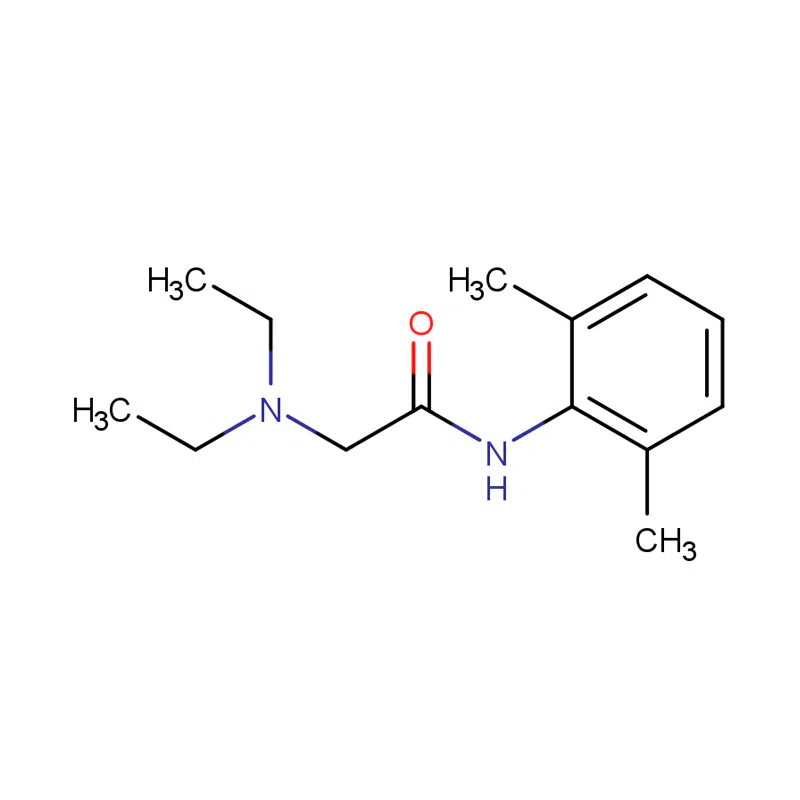
Product Description of Lidocaine CAS#137-58-6
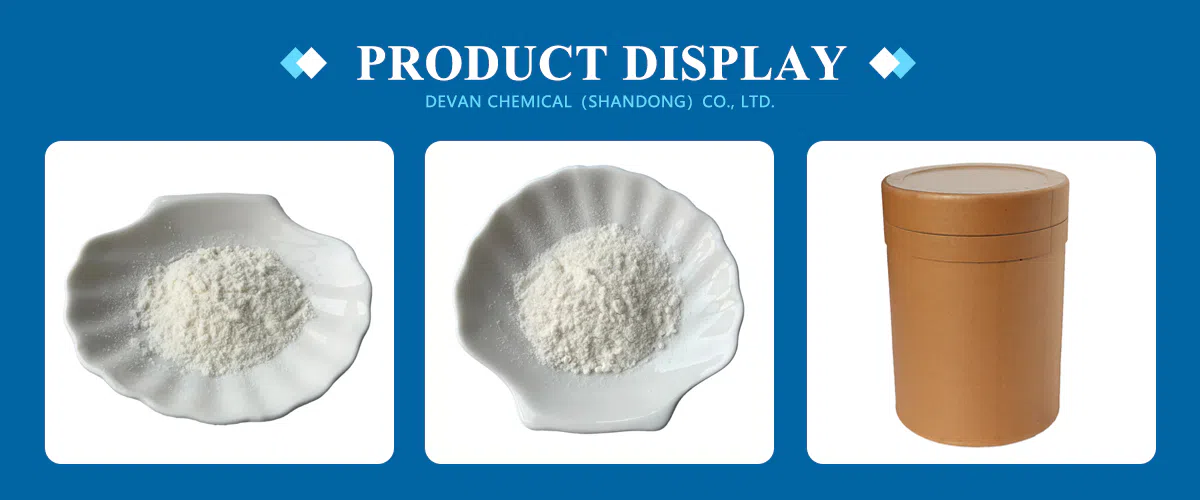
Lidocaine, has molecular formula C14H22N2O and molecular weight of 234.34. It occurs as white or off-white crystalline powder, with a melting point of 66–69°C. Slightly soluble in water, freely soluble in ethanol, chloroform and ether.
This amide-type local anesthetic features rapid onset and long duration of anesthetic effect, and also possesses antiarrhythmic activity. It is a key pharmaceutical intermediate and active pharmaceutical ingredient, widely used for local anesthesia and ventricular arrhythmia treatment.
Lidocaine Chemical Properties
| Melting point | 66-69°C |
| Boiling point | bp4 180-182°; bp2 159-160° |
| density | 0.9944 (rough estimate) |
| refractive index | 1.5110 (estimate) |
| Fp | 9℃ |
| storage temp. | Store at RT |
| solubility | ethanol: 4 mg/mL |
| form | Needle shaped crystals or crystalline powder |
| pka | pKa 7.88(H2O)(Approximate) |
| color | White to slightly yellow |
| Water Solubility | practically insoluble |
| Merck | 145482 |
| BCS Class | 1 |
| Stability: | Stable. Incompatible with strong oxidizing agents. |
| InChIKey | NNJVILVZKWQKPM-UHFFFAOYSA-N |
| LogP | 2.44 |
| CAS DataBase Reference | 137-58-6(CAS DataBase Reference) |
| NIST Chemistry Reference | Lidocaine(137-58-6) |
| EPA Substance Registry System | Acetamide, 2-(diethylamino)-N-(2,6-dimethylphenyl)- (13 |
| Hazard Codes | Xn,T,F |
| Risk Statements | 22-39/23/24/25-23/24/25-11 |
| Safety Statements | 22-26-36-45-36/37-16-7 |
| RIDADR | 3249 |
| WGK Germany | 3 |
| RTECS | AN7525000 |
| HazardClass | 6.1(b) |
| PackingGroup | III |
| HS Code | 29242990 |
| Hazardous Substances Data | 137-58-6(Hazardous Substances Data) |
| Toxicity | LD50 oral in rat: 317mg/kg |

Product Application of Lidocaine CAS#137-58-6
Lidocaine exerts local anesthetic activity through reversible sodium-channel blockade, which impedes the propagation of action potentials across nerve fibers. Sensory nerve fibers get blocked ahead of motor nerve fibers, so low-dose lidocaine can realize selective sensory-nerve inhibition.
Besides local-anesthetic properties, Lidocaine holds antiarrhythmic performance and is categorized as a Class Ib antiarrhythmic pharmaceutical agent. It helps lower ventricular heart rate, shorten action-potential duration as well as absolute refractory period, meanwhile extending the relative refractory-period scope.
This medicine delivers fast pharmacological onset yet maintains comparatively short acting time. Co-administration with epinephrine will cut down systemic substance absorption and accordingly prolong local-anesthesia duration.